Ext.chart.series.Bar
Alternate names
Ext.chart.BarChartExt.chart.BarSeriesExt.chart.StackedBarChartHierarchy
Ext.BaseExt.chart.series.SeriesExt.chart.series.CartesianExt.chart.series.BarInherited mixins
Requires
Subclasses
Files
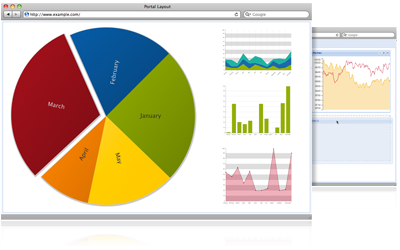
Creates a Bar Chart. A Bar Chart is a useful visualization technique to display quantitative information for different categories that can show some progression (or regression) in the dataset. As with all other series, the Bar Series must be appended in the series Chart array configuration. See the Chart documentation for more information. A typical configuration object for the bar series could be:
var store = Ext.create('Ext.data.JsonStore', {
fields: ['name', 'data1', 'data2', 'data3', 'data4', 'data5'],
data: [
{ 'name': 'metric one', 'data1':10, 'data2':12, 'data3':14, 'data4':8, 'data5':13 },
{ 'name': 'metric two', 'data1':7, 'data2':8, 'data3':16, 'data4':10, 'data5':3 },
{ 'name': 'metric three', 'data1':5, 'data2':2, 'data3':14, 'data4':12, 'data5':7 },
{ 'name': 'metric four', 'data1':2, 'data2':14, 'data3':6, 'data4':1, 'data5':23 },
{ 'name': 'metric five', 'data1':27, 'data2':38, 'data3':36, 'data4':13, 'data5':33 }
]
});
Ext.create('Ext.chart.Chart', {
renderTo: Ext.getBody(),
width: 500,
height: 300,
animate: true,
store: store,
axes: [{
type: 'Numeric',
position: 'bottom',
fields: ['data1'],
label: {
renderer: Ext.util.Format.numberRenderer('0,0')
},
title: 'Sample Values',
grid: true,
minimum: 0
}, {
type: 'Category',
position: 'left',
fields: ['name'],
title: 'Sample Metrics'
}],
series: [{
type: 'bar',
axis: 'bottom',
highlight: true,
tips: {
trackMouse: true,
width: 140,
height: 28,
renderer: function(storeItem, item) {
this.setTitle(storeItem.get('name') + ': ' + storeItem.get('data1') + ' views');
}
},
label: {
display: 'insideEnd',
field: 'data1',
renderer: Ext.util.Format.numberRenderer('0'),
orientation: 'horizontal',
color: '#333',
'text-anchor': 'middle'
},
xField: 'name',
yField: ['data1']
}]
});
In this configuration we set bar as the series type, bind the values of the bar to the bottom axis and set the
xField or category field to the name parameter of the store. We also set highlight to true which enables smooth
animations when bars are hovered. We also set some configuration for the bar labels to be displayed inside the bar,
to display the information found in the data1 property of each element store, to render a formated text with the
Ext.util.Format we pass in, to have an horizontal orientation (as opposed to a vertical one) and we also set
other styles like color, text-anchor, etc.
Available since: 3.4.0
Config options
The position of the axis to bind the values to. Possible values are 'left', 'bottom', 'top' and 'right'. You must explicitly set this value to bind the values of the line series to the ones in the axis, otherwise a relative scale will be used.
Defaults to: 'left'
Available since: 4.0.6
Whether to set the visualization as column chart or horizontal bar chart.
Defaults to: false
Available since: 4.0.0
The gutter space between groups of bars, as a percentage of the bar width
Defaults to: 38.2
Available since: 4.0.0
The gutter space between single bars, as a percentage of the bar width
Defaults to: 38.2
Available since: 4.0.0
If set to true it will highlight the markers or the series when hovering
with the mouse. This parameter can also be an object with the same style
properties you would apply to a Ext.draw.Sprite to apply custom
styles to markers and series.
Available since: 4.0.0
Object with the following properties:
display : String
Specifies the presence and position of labels for each pie slice. Either "rotate", "middle", "insideStart", "insideEnd", "outside", "over", "under", or "none" to prevent label rendering. Default value: 'none'.
color : String
The color of the label text. Default value: '#000' (black).
contrast : Boolean
True to render the label in contrasting color with the backround. Default value: false.
field : String
The name of the field to be displayed in the label. Default value: 'name'.
minMargin : Number
Specifies the minimum distance from a label to the origin of the visualization. This parameter is useful when using PieSeries width variable pie slice lengths. Default value: 50.
font : String
The font used for the labels. Default value: "11px Helvetica, sans-serif".
orientation : String
Either "horizontal" or "vertical". Dafault value: "horizontal".
renderer : Function
Optional function for formatting the label into a displayable value. Default value: function(v) { return v; }
Available since: 4.0.5
An (optional) object with event callbacks. All event callbacks get the target item as first parameter. The callback functions are:
- itemmouseover
- itemmouseout
- itemmousedown
- itemmouseup
Available since: 4.0.0
Overrides: Ext.util.Observable.listeners
A function that can be overridden to set custom styling properties to each rendered element. Passes in (sprite, record, attributes, index, store) to the function.
Available since: 4.0.0
Whether to show this series in the legend.
Defaults to: true
Available since: 4.0.0
Style properties that will override the theming series styles.
Defaults to: {}
Available since: 3.4.0
Add tooltips to the visualization's markers. The options for the tips are the same configuration used with Ext.tip.ToolTip. For example:
tips: {
trackMouse: true,
width: 140,
height: 28,
renderer: function(storeItem, item) {
this.setTitle(storeItem.get('name') + ': ' + storeItem.get('data1') + ' views');
}
},
Available since: 4.0.0
The human-readable name of the series.
Available since: 4.0.0
End Definitions
The type of series. Set in subclasses.
Defaults to: 'bar'
Available since: 4.0.0
Overrides: Ext.chart.series.Series.type
Properties
a regex to parse url type colors.
Defaults to: /url\s*\(\s*#([^\/)]+)\s*\)/
Available since: 4.0.0
Defaults to: /^(?:scope|delay|buffer|single|stopEvent|preventDefault|stopPropagation|normalized|args|delegate|element|vertical|horizontal|freezeEvent)$/
Available since: 4.0.0
Get the reference to the current class from which this object was instantiated. Unlike statics,
this.self is scope-dependent and it's meant to be used for dynamic inheritance. See statics
for a detailed comparison
Ext.define('My.Cat', {
statics: {
speciesName: 'Cat' // My.Cat.speciesName = 'Cat'
},
constructor: function() {
alert(this.self.speciesName); / dependent on 'this'
return this;
},
clone: function() {
return new this.self();
}
});
Ext.define('My.SnowLeopard', {
extend: 'My.Cat',
statics: {
speciesName: 'Snow Leopard' // My.SnowLeopard.speciesName = 'Snow Leopard'
}
});
var cat = new My.Cat(); // alerts 'Cat'
var snowLeopard = new My.SnowLeopard(); // alerts 'Snow Leopard'
var clone = snowLeopard.clone();
alert(Ext.getClassName(clone)); // alerts 'My.SnowLeopard'
Available since: 4.0.0
triggerdrawlistener flag
Defaults to: false
Available since: 4.0.0
Methods
Instance Methods ... addEvents( o, [more] )Adds the specified events to the list of events which this Observable may fire. ...Adds the specified events to the list of events which this Observable may fire.
Available since: 1.1.0
Parameters
- o : Object/String
Either an object with event names as properties with a value of true or the first
event name string if multiple event names are being passed as separate parameters. Usage:
this.addEvents({
storeloaded: true,
storecleared: true
});
- more : String... (optional)
Additional event names if multiple event names are being passed as separate
parameters. Usage:
this.addEvents('storeloaded', 'storecleared');
addListener( eventName, fn, [scope], [options] )Appends an event handler to this object. ...Appends an event handler to this object.
Available since: 1.1.0
Parameters
- eventName : String
The name of the event to listen for. May also be an object who's property names are
event names.
- fn : Function
The method the event invokes. Will be called with arguments given to
fireEvent plus the options parameter described below.
- scope : Object (optional)
The scope (this reference) in which the handler function is executed. If
omitted, defaults to the object which fired the event.
- options : Object (optional)
An object containing handler configuration.
Note: Unlike in ExtJS 3.x, the options object will also be passed as the last argument to every event handler.
This object may contain any of the following properties:
scope : Object
The scope (this reference) in which the handler function is executed. If omitted, defaults to the object
which fired the event.
delay : Number
The number of milliseconds to delay the invocation of the handler after the event fires.
single : Boolean
True to add a handler to handle just the next firing of the event, and then remove itself.
buffer : Number
Causes the handler to be scheduled to run in an Ext.util.DelayedTask delayed by the specified number of
milliseconds. If the event fires again within that time, the original handler is not invoked, but the new
handler is scheduled in its place.
target : Observable
Only call the handler if the event was fired on the target Observable, not if the event was bubbled up from a
child Observable.
element : String
This option is only valid for listeners bound to Components. The name of a Component
property which references an element to add a listener to.
This option is useful during Component construction to add DOM event listeners to elements of
Components which will exist only after the Component is rendered.
For example, to add a click listener to a Panel's body:
new Ext.panel.Panel({
title: 'The title',
listeners: {
click: this.handlePanelClick,
element: 'body'
}
});
Combining Options
Using the options argument, it is possible to combine different types of listeners:
A delayed, one-time listener.
myPanel.on('hide', this.handleClick, this, {
single: true,
delay: 100
});
Attaching multiple handlers in 1 call
The method also allows for a single argument to be passed which is a config object containing properties which
specify multiple events. For example:
myGridPanel.on({
cellClick: this.onCellClick,
mouseover: this.onMouseOver,
mouseout: this.onMouseOut,
scope: this // Important. Ensure "this" is correct during handler execution
});
One can also specify options for each event handler separately:
myGridPanel.on({
cellClick: {fn: this.onCellClick, scope: this, single: true},
mouseover: {fn: panel.onMouseOver, scope: panel}
});
addManagedListener( item, ename, [fn], [scope], [opt] )Adds listeners to any Observable object (or Ext.Element) which are automatically removed when this Component is
destr...Adds listeners to any Observable object (or Ext.Element) which are automatically removed when this Component is
destroyed.
Available since: 4.0.0
Parameters
- item : Ext.util.Observable/Ext.Element
The item to which to add a listener/listeners.
- ename : Object/String
The event name, or an object containing event name properties.
- fn : Function (optional)
If the ename parameter was an event name, this is the handler function.
- scope : Object (optional)
If the ename parameter was an event name, this is the scope (this reference)
in which the handler function is executed.
- opt : Object (optional)
If the ename parameter was an event name, this is the
addListener options.
Call the original method that was previously overridden with override
Ext.define('My.Cat', {
constructor: functi...Call the original method that was previously overridden with override
Ext.define('My.Cat', {
constructor: function() {
alert("I'm a cat!");
return this;
}
});
My.Cat.override({
constructor: function() {
alert("I'm going to be a cat!");
var instance = this.callOverridden();
alert("Meeeeoooowwww");
return instance;
}
});
var kitty = new My.Cat(); // alerts "I'm going to be a cat!"
// alerts "I'm a cat!"
// alerts "Meeeeoooowwww"
Available since: 4.0.0
Parameters
- args : Array/Arguments
The arguments, either an array or the arguments object
Returns
- Object
Returns the result after calling the overridden method
Call the parent's overridden method. ...Call the parent's overridden method. For example:
Ext.define('My.own.A', {
constructor: function(test) {
alert(test);
}
});
Ext.define('My.own.B', {
extend: 'My.own.A',
constructor: function(test) {
alert(test);
this.callParent([test + 1]);
}
});
Ext.define('My.own.C', {
extend: 'My.own.B',
constructor: function() {
alert("Going to call parent's overriden constructor...");
this.callParent(arguments);
}
});
var a = new My.own.A(1); // alerts '1'
var b = new My.own.B(1); // alerts '1', then alerts '2'
var c = new My.own.C(2); // alerts "Going to call parent's overriden constructor..."
// alerts '2', then alerts '3'
Available since: 4.0.0
Parameters
- args : Array/Arguments
The arguments, either an array or the arguments object
from the current method, for example: this.callParent(arguments)
Returns
- Object
Returns the result from the superclass' method
Removes all listeners for this object including the managed listeners ...Removes all listeners for this object including the managed listeners
Available since: 4.0.0
Removes all managed listeners for this object. ...Removes all managed listeners for this object.
Available since: 4.0.0
combine( index1, index2 )★private continueFireEvent( eventName, args, bubbles )★private drawSeries( )Draws the series for the current chart. ...Draws the series for the current chart.
Available since: 4.0.0
eachRecord( fn, scope )★Iterate over each of the records for this series. ...Iterate over each of the records for this series. The default implementation simply iterates
through the entire data store, but individual series implementations can override this to
provide custom handling, e.g. adding/removing records.
Available since: Ext JS 4.0.7
Parameters
eachYValue( record, fn, scope )★protectedIterates over a given record's values for each of this series's yFields,
executing a given function for each value. ...Iterates over a given record's values for each of this series's yFields,
executing a given function for each value. Any yFields that have been combined
via legend drag-drop will be treated as a single value.
Available since: Ext JS 4.0.7
Parameters
- record : Ext.data.Model
- fn : Function
- scope : Object
enableBubble( events )Enables events fired by this Observable to bubble up an owner hierarchy by calling this.getBubbleTarget() if
present. ...Enables events fired by this Observable to bubble up an owner hierarchy by calling this.getBubbleTarget() if
present. There is no implementation in the Observable base class.
This is commonly used by Ext.Components to bubble events to owner Containers.
See Ext.Component.getBubbleTarget. The default implementation in Ext.Component returns the
Component's immediate owner. But if a known target is required, this can be overridden to access the
required target more quickly.
Example:
Ext.override(Ext.form.field.Base, {
// Add functionality to Field's initComponent to enable the change event to bubble
initComponent : Ext.Function.createSequence(Ext.form.field.Base.prototype.initComponent, function() {
this.enableBubble('change');
}),
// We know that we want Field's events to bubble directly to the FormPanel.
getBubbleTarget : function() {
if (!this.formPanel) {
this.formPanel = this.findParentByType('form');
}
return this.formPanel;
}
});
var myForm = new Ext.formPanel({
title: 'User Details',
items: [{
...
}],
listeners: {
change: function() {
// Title goes red if form has been modified.
myForm.header.setStyle('color', 'red');
}
}
});
Available since: 3.4.0
Parameters
Fires the specified event with the passed parameters (minus the event name, plus the options object passed
to addList...Fires the specified event with the passed parameters (minus the event name, plus the options object passed
to addListener).
An event may be set to bubble up an Observable parent hierarchy (See Ext.Component.getBubbleTarget) by
calling enableBubble.
Available since: 1.1.0
Parameters
- eventName : String
The name of the event to fire.
- args : Object...
Variable number of parameters are passed to handlers.
Returns
- Boolean
returns false if any of the handlers return false otherwise it returns true.
getBounds( )privateGet chart and data boundaries ...Get chart and data boundaries
Available since: 4.0.0
getBubbleParent( ) : Ext.util.Observable★privateGets the bubbling parent for an Observable ...Gets the bubbling parent for an Observable
Available since: Ext JS 4.0.7
Returns
- Ext.util.Observable
The bubble parent. null is returned if no bubble target exists
For a given x/y point relative to the Surface, find a corresponding item from this
series, if any. ...For a given x/y point relative to the Surface, find a corresponding item from this
series, if any.
Available since: 4.0.0
Parameters
Returns
- Object
An object describing the item, or null if there is no matching item.
The exact contents of this object will vary by series type, but should always contain the following:
- series : Ext.chart.series.Series
the Series object to which the item belongs
- value : Object
the value(s) of the item's data point
- point : Array
the x/y coordinates relative to the chart box of a single point
for this data item, which can be used as e.g. a tooltip anchor point.
- sprite : Ext.draw.Sprite
the item's rendering Sprite.
getLabelSize( value )privateGets the dimensions of a given bar label. ...Gets the dimensions of a given bar label. Uses a single hidden sprite to avoid
changing visible sprites.
Available since: 4.0.0
Parameters
- value : Object
getLegendColor( index )Returns a string with the color to be used for the series legend item. ...Returns a string with the color to be used for the series legend item.
Available since: 4.0.0
Parameters
- index : Object
Overrides: Ext.chart.series.Series.getLegendColor
getMinMaxXValues( ) : Array★Calculate the min and max values for this series's xField. ...Calculate the min and max values for this series's xField.
Available since: Ext JS 4.0.7
Returns
- Array
[min, max]
getMinMaxYValues( ) : Array★Calculate the min and max values for this series's yField(s). ...Calculate the min and max values for this series's yField(s). Takes into account yField
combinations, exclusions, and stacking.
Available since: Ext JS 4.0.7
Returns
- Array
[min, max]
getPaths( )privateBuild an array of paths for the chart ...Build an array of paths for the chart
Available since: 4.0.0
getRecordCount( )★Return the number of records being displayed in this series. ...Return the number of records being displayed in this series. Defaults to the number of
records in the store; individual series implementations can override to provide custom handling.
Available since: Ext JS 4.0.7
getYValueAccessors( ) : Array★protectedReturns an array of functions, each of which returns the value of the yField
corresponding to function's index in the...Returns an array of functions, each of which returns the value of the yField
corresponding to function's index in the array, for a given record (each function takes the
record as its only argument.) If yFields have been combined by the user via legend drag-drop,
this list of accessors will be kept in sync with those combinations.
Available since: Ext JS 4.0.7
Returns
- Array
array of accessor functions
getYValueCount( ) : Number★protectedReturns the number of yField values, taking into account fields combined
via legend drag-drop. ...Returns the number of yField values, taking into account fields combined
via legend drag-drop.
Available since: Ext JS 4.0.7
Returns
hideAll( )privatehide all markers
Hides all the elements in the series. ...hide all markers
Hides all the elements in the series.
Available since: 4.0.0
Overrides: Ext.chart.series.Series.hideAll
highlight( Default ) highlightItem( item )Highlight the given series item. ...Highlight the given series item.
Available since: 4.0.2
Parameters
- item : Object
Info about the item; same format as returned by getItemForPoint.
Overrides: Ext.chart.Highlight.highlightItem
Initialize configuration for this class. ...Initialize configuration for this class. a typical example:
Ext.define('My.awesome.Class', {
// The default config
config: {
name: 'Awesome',
isAwesome: true
},
constructor: function(config) {
this.initConfig(config);
return this;
}
});
var awesome = new My.awesome.Class({
name: 'Super Awesome'
});
alert(awesome.getName()); // 'Super Awesome'
Available since: 4.0.0
Parameters
- config : Object
Returns
- Object
mixins The mixin prototypes as key - value pairs
isExcluded( index )★Determines whether the series item at the given index has been excluded, i.e. ...Determines whether the series item at the given index has been excluded, i.e. toggled off in the legend.
Available since: Ext JS 4.0.7
Parameters
- index : Object
isItemInPoint( x, y, item )private ... mixin( name, cls )private mon( item, ename, [fn], [scope], [opt] )Shorthand for addManagedListener. ...Shorthand for addManagedListener.
Adds listeners to any Observable object (or Ext.Element) which are automatically removed when this Component is
destroyed.
Available since: 4.0.2
Parameters
- item : Ext.util.Observable/Ext.Element
The item to which to add a listener/listeners.
- ename : Object/String
The event name, or an object containing event name properties.
- fn : Function (optional)
If the ename parameter was an event name, this is the handler function.
- scope : Object (optional)
If the ename parameter was an event name, this is the scope (this reference)
in which the handler function is executed.
- opt : Object (optional)
If the ename parameter was an event name, this is the
addListener options.
mun( item, ename, [fn], [scope] )Shorthand for removeManagedListener. ...Shorthand for removeManagedListener.
Removes listeners that were added by the mon method.
Available since: 4.0.2
Parameters
- item : Ext.util.Observable/Ext.Element
The item from which to remove a listener/listeners.
- ename : Object/String
The event name, or an object containing event name properties.
- fn : Function (optional)
If the ename parameter was an event name, this is the handler function.
- scope : Object (optional)
If the ename parameter was an event name, this is the scope (this reference)
in which the handler function is executed.
on( eventName, fn, [scope], [options] )Shorthand for addListener. ...Shorthand for addListener.
Appends an event handler to this object.
Available since: 1.1.0
Parameters
- eventName : String
The name of the event to listen for. May also be an object who's property names are
event names.
- fn : Function
The method the event invokes. Will be called with arguments given to
fireEvent plus the options parameter described below.
- scope : Object (optional)
The scope (this reference) in which the handler function is executed. If
omitted, defaults to the object which fired the event.
- options : Object (optional)
An object containing handler configuration.
Note: Unlike in ExtJS 3.x, the options object will also be passed as the last argument to every event handler.
This object may contain any of the following properties:
scope : Object
The scope (this reference) in which the handler function is executed. If omitted, defaults to the object
which fired the event.
delay : Number
The number of milliseconds to delay the invocation of the handler after the event fires.
single : Boolean
True to add a handler to handle just the next firing of the event, and then remove itself.
buffer : Number
Causes the handler to be scheduled to run in an Ext.util.DelayedTask delayed by the specified number of
milliseconds. If the event fires again within that time, the original handler is not invoked, but the new
handler is scheduled in its place.
target : Observable
Only call the handler if the event was fired on the target Observable, not if the event was bubbled up from a
child Observable.
element : String
This option is only valid for listeners bound to Components. The name of a Component
property which references an element to add a listener to.
This option is useful during Component construction to add DOM event listeners to elements of
Components which will exist only after the Component is rendered.
For example, to add a click listener to a Panel's body:
new Ext.panel.Panel({
title: 'The title',
listeners: {
click: this.handlePanelClick,
element: 'body'
}
});
Combining Options
Using the options argument, it is possible to combine different types of listeners:
A delayed, one-time listener.
myPanel.on('hide', this.handleClick, this, {
single: true,
delay: 100
});
Attaching multiple handlers in 1 call
The method also allows for a single argument to be passed which is a config object containing properties which
specify multiple events. For example:
myGridPanel.on({
cellClick: this.onCellClick,
mouseover: this.onMouseOver,
mouseout: this.onMouseOut,
scope: this // Important. Ensure "this" is correct during handler execution
});
One can also specify options for each event handler separately:
myGridPanel.on({
cellClick: {fn: this.onCellClick, scope: this, single: true},
mouseover: {fn: panel.onMouseOver, scope: panel}
});
onAnimate( sprite, attr )privateused to animate label, markers and other sprites. ...used to animate label, markers and other sprites.
Available since: 4.0.0
Parameters
Overrides: Ext.chart.series.Series.onAnimate
onCreateCallout( storeItem, item, i, display )private onCreateLabel( storeItem, item, i, display )private onMouseLeave( )privatewrapper for the mouseleave event. ...wrapper for the mouseleave event.
Available since: 4.0.0
onPlaceLabel( label, storeItem, item, i, display, animate, j, index )private relayEvents( origin, events, prefix )Relays selected events from the specified Observable as if the events were fired by this. ... removeListener( eventName, fn, [scope] )Removes an event handler. ...Removes an event handler.
Available since: 1.1.0
Parameters
- eventName : String
The type of event the handler was associated with.
- fn : Function
The handler to remove. This must be a reference to the function passed into the
addListener call.
- scope : Object (optional)
The scope originally specified for the handler. It must be the same as the
scope argument specified in the original call to addListener or the listener will not be removed.
removeManagedListener( item, ename, [fn], [scope] )Removes listeners that were added by the mon method. ...Removes listeners that were added by the mon method.
Available since: 4.0.0
Parameters
- item : Ext.util.Observable/Ext.Element
The item from which to remove a listener/listeners.
- ename : Object/String
The event name, or an object containing event name properties.
- fn : Function (optional)
If the ename parameter was an event name, this is the handler function.
- scope : Object (optional)
If the ename parameter was an event name, this is the scope (this reference)
in which the handler function is executed.
removeManagedListenerItem( isClear, managedListener )private renderLabels( )privatea method to render all labels in the labelGroup ...a method to render all labels in the labelGroup
Available since: 4.0.0
renderShadows( i, barAttr, baseAttrs, bounds )private resumeEvents( )Resumes firing events (see suspendEvents). ...Resumes firing events (see suspendEvents).
If events were suspended using the queueSuspended parameter, then all events fired
during event suspension will be sent to any listeners now.
Available since: 2.3.0
setTitle( index, title )Changes the value of the title for the series. ...Changes the value of the title for the series.
Arguments can take two forms:
- A single String value: this will be used as the new single title for the series (applies
to series with only one yField)
- A numeric index and a String value: this will set the title for a single indexed yField.
Available since: 4.0.0
Parameters
showAll( )privateshow all markers
Shows all the elements in the series. ...show all markers
Shows all the elements in the series.
Available since: 4.0.0
Overrides: Ext.chart.series.Series.showAll
Get the reference to the class from which this object was instantiated. ...Get the reference to the class from which this object was instantiated. Note that unlike self,
this.statics() is scope-independent and it always returns the class from which it was called, regardless of what
this points to during run-time
Ext.define('My.Cat', {
statics: {
totalCreated: 0,
speciesName: 'Cat' // My.Cat.speciesName = 'Cat'
},
constructor: function() {
var statics = this.statics();
alert(statics.speciesName); // always equals to 'Cat' no matter what 'this' refers to
// equivalent to: My.Cat.speciesName
alert(this.self.speciesName); // dependent on 'this'
statics.totalCreated++;
return this;
},
clone: function() {
var cloned = new this.self; // dependent on 'this'
cloned.groupName = this.statics().speciesName; // equivalent to: My.Cat.speciesName
return cloned;
}
});
Ext.define('My.SnowLeopard', {
extend: 'My.Cat',
statics: {
speciesName: 'Snow Leopard' // My.SnowLeopard.speciesName = 'Snow Leopard'
},
constructor: function() {
this.callParent();
}
});
var cat = new My.Cat(); // alerts 'Cat', then alerts 'Cat'
var snowLeopard = new My.SnowLeopard(); // alerts 'Cat', then alerts 'Snow Leopard'
var clone = snowLeopard.clone();
alert(Ext.getClassName(clone)); // alerts 'My.SnowLeopard'
alert(clone.groupName); // alerts 'Cat'
alert(My.Cat.totalCreated); // alerts 3
Available since: 4.0.0
Returns
suspendEvents( queueSuspended )Suspends the firing of all events. ...Suspends the firing of all events. (see resumeEvents)
Available since: 2.3.0
Parameters
- queueSuspended : Boolean
Pass as true to queue up suspended events to be fired
after the resumeEvents call instead of discarding all suspended events.
un( eventName, fn, [scope] )Shorthand for removeListener. ...Shorthand for removeListener.
Removes an event handler.
Available since: 1.1.0
Parameters
- eventName : String
The type of event the handler was associated with.
- fn : Function
The handler to remove. This must be a reference to the function passed into the
addListener call.
- scope : Object (optional)
The scope originally specified for the handler. It must be the same as the
scope argument specified in the original call to addListener or the listener will not be removed.
Un-highlight any existing highlights ...Un-highlight any existing highlights
Available since: 4.0.2
Overrides: Ext.chart.Highlight.unHighlightItem
visibleInLegend( index )privateChecks whether the data field should be visible in the legend ...Checks whether the data field should be visible in the legend
Available since: 4.0.0
Parameters
- index : Number
The index of the current item
Adds the specified events to the list of events which this Observable may fire.
Available since: 1.1.0
Parameters
- o : Object/String
Either an object with event names as properties with a value of
trueor the first event name string if multiple event names are being passed as separate parameters. Usage:this.addEvents({ storeloaded: true, storecleared: true }); - more : String... (optional)
Additional event names if multiple event names are being passed as separate parameters. Usage:
this.addEvents('storeloaded', 'storecleared');
Appends an event handler to this object.
Available since: 1.1.0
Parameters
- eventName : String
The name of the event to listen for. May also be an object who's property names are event names.
- fn : Function
The method the event invokes. Will be called with arguments given to fireEvent plus the
optionsparameter described below. - scope : Object (optional)
The scope (
thisreference) in which the handler function is executed. If omitted, defaults to the object which fired the event. - options : Object (optional)
An object containing handler configuration.
Note: Unlike in ExtJS 3.x, the options object will also be passed as the last argument to every event handler.
This object may contain any of the following properties:
scope : Object
The scope (
thisreference) in which the handler function is executed. If omitted, defaults to the object which fired the event.delay : Number
The number of milliseconds to delay the invocation of the handler after the event fires.
single : Boolean
True to add a handler to handle just the next firing of the event, and then remove itself.
buffer : Number
Causes the handler to be scheduled to run in an Ext.util.DelayedTask delayed by the specified number of milliseconds. If the event fires again within that time, the original handler is not invoked, but the new handler is scheduled in its place.
target : Observable
Only call the handler if the event was fired on the target Observable, not if the event was bubbled up from a child Observable.
element : String
This option is only valid for listeners bound to Components. The name of a Component property which references an element to add a listener to.
This option is useful during Component construction to add DOM event listeners to elements of Components which will exist only after the Component is rendered. For example, to add a click listener to a Panel's body:
new Ext.panel.Panel({ title: 'The title', listeners: { click: this.handlePanelClick, element: 'body' } });
Combining Options
Using the options argument, it is possible to combine different types of listeners:
A delayed, one-time listener.
myPanel.on('hide', this.handleClick, this, { single: true, delay: 100 });Attaching multiple handlers in 1 call
The method also allows for a single argument to be passed which is a config object containing properties which specify multiple events. For example:
myGridPanel.on({ cellClick: this.onCellClick, mouseover: this.onMouseOver, mouseout: this.onMouseOut, scope: this // Important. Ensure "this" is correct during handler execution });One can also specify options for each event handler separately:
myGridPanel.on({ cellClick: {fn: this.onCellClick, scope: this, single: true}, mouseover: {fn: panel.onMouseOver, scope: panel} });
Adds listeners to any Observable object (or Ext.Element) which are automatically removed when this Component is destroyed.
Available since: 4.0.0
Parameters
- item : Ext.util.Observable/Ext.Element
The item to which to add a listener/listeners.
- ename : Object/String
The event name, or an object containing event name properties.
- fn : Function (optional)
If the
enameparameter was an event name, this is the handler function. - scope : Object (optional)
If the
enameparameter was an event name, this is the scope (thisreference) in which the handler function is executed. - opt : Object (optional)
If the
enameparameter was an event name, this is the addListener options.
Call the original method that was previously overridden with override
Ext.define('My.Cat', {
constructor: function() {
alert("I'm a cat!");
return this;
}
});
My.Cat.override({
constructor: function() {
alert("I'm going to be a cat!");
var instance = this.callOverridden();
alert("Meeeeoooowwww");
return instance;
}
});
var kitty = new My.Cat(); // alerts "I'm going to be a cat!"
// alerts "I'm a cat!"
// alerts "Meeeeoooowwww"
Available since: 4.0.0
Parameters
- args : Array/Arguments
The arguments, either an array or the
argumentsobject
Returns
- Object
Returns the result after calling the overridden method
Call the parent's overridden method. For example:
Ext.define('My.own.A', {
constructor: function(test) {
alert(test);
}
});
Ext.define('My.own.B', {
extend: 'My.own.A',
constructor: function(test) {
alert(test);
this.callParent([test + 1]);
}
});
Ext.define('My.own.C', {
extend: 'My.own.B',
constructor: function() {
alert("Going to call parent's overriden constructor...");
this.callParent(arguments);
}
});
var a = new My.own.A(1); // alerts '1'
var b = new My.own.B(1); // alerts '1', then alerts '2'
var c = new My.own.C(2); // alerts "Going to call parent's overriden constructor..."
// alerts '2', then alerts '3'
Available since: 4.0.0
Parameters
- args : Array/Arguments
The arguments, either an array or the
argumentsobject from the current method, for example:this.callParent(arguments)
Returns
- Object
Returns the result from the superclass' method
Removes all listeners for this object including the managed listeners
Available since: 4.0.0
Removes all managed listeners for this object.
Available since: 4.0.0
Draws the series for the current chart.
Available since: 4.0.0
Iterate over each of the records for this series. The default implementation simply iterates through the entire data store, but individual series implementations can override this to provide custom handling, e.g. adding/removing records.
Available since: Ext JS 4.0.7
Parameters
Iterates over a given record's values for each of this series's yFields, executing a given function for each value. Any yFields that have been combined via legend drag-drop will be treated as a single value.
Available since: Ext JS 4.0.7
Parameters
- record : Ext.data.Model
- fn : Function
- scope : Object
Enables events fired by this Observable to bubble up an owner hierarchy by calling this.getBubbleTarget() if
present. There is no implementation in the Observable base class.
This is commonly used by Ext.Components to bubble events to owner Containers. See Ext.Component.getBubbleTarget. The default implementation in Ext.Component returns the Component's immediate owner. But if a known target is required, this can be overridden to access the required target more quickly.
Example:
Ext.override(Ext.form.field.Base, {
// Add functionality to Field's initComponent to enable the change event to bubble
initComponent : Ext.Function.createSequence(Ext.form.field.Base.prototype.initComponent, function() {
this.enableBubble('change');
}),
// We know that we want Field's events to bubble directly to the FormPanel.
getBubbleTarget : function() {
if (!this.formPanel) {
this.formPanel = this.findParentByType('form');
}
return this.formPanel;
}
});
var myForm = new Ext.formPanel({
title: 'User Details',
items: [{
...
}],
listeners: {
change: function() {
// Title goes red if form has been modified.
myForm.header.setStyle('color', 'red');
}
}
});
Available since: 3.4.0
Parameters
Fires the specified event with the passed parameters (minus the event name, plus the options object passed
to addListener).
An event may be set to bubble up an Observable parent hierarchy (See Ext.Component.getBubbleTarget) by calling enableBubble.
Available since: 1.1.0
Parameters
- eventName : String
The name of the event to fire.
- args : Object...
Variable number of parameters are passed to handlers.
Returns
- Boolean
returns false if any of the handlers return false otherwise it returns true.
Get chart and data boundaries
Available since: 4.0.0
Gets the bubbling parent for an Observable
Available since: Ext JS 4.0.7
Returns
- Ext.util.Observable
The bubble parent. null is returned if no bubble target exists
For a given x/y point relative to the Surface, find a corresponding item from this series, if any.
Available since: 4.0.0
Parameters
Returns
- Object
An object describing the item, or null if there is no matching item. The exact contents of this object will vary by series type, but should always contain the following:
- series : Ext.chart.series.Series
the Series object to which the item belongs
- value : Object
the value(s) of the item's data point
- point : Array
the x/y coordinates relative to the chart box of a single point for this data item, which can be used as e.g. a tooltip anchor point.
- sprite : Ext.draw.Sprite
the item's rendering Sprite.
- series : Ext.chart.series.Series
Gets the dimensions of a given bar label. Uses a single hidden sprite to avoid changing visible sprites.
Available since: 4.0.0
Parameters
- value : Object
Returns a string with the color to be used for the series legend item.
Available since: 4.0.0
Parameters
- index : Object
Overrides: Ext.chart.series.Series.getLegendColor
Calculate the min and max values for this series's xField.
Available since: Ext JS 4.0.7
Returns
- Array
[min, max]
Calculate the min and max values for this series's yField(s). Takes into account yField combinations, exclusions, and stacking.
Available since: Ext JS 4.0.7
Returns
- Array
[min, max]
Build an array of paths for the chart
Available since: 4.0.0
Return the number of records being displayed in this series. Defaults to the number of records in the store; individual series implementations can override to provide custom handling.
Available since: Ext JS 4.0.7
Returns an array of functions, each of which returns the value of the yField corresponding to function's index in the array, for a given record (each function takes the record as its only argument.) If yFields have been combined by the user via legend drag-drop, this list of accessors will be kept in sync with those combinations.
Available since: Ext JS 4.0.7
Returns
- Array
array of accessor functions
Returns the number of yField values, taking into account fields combined via legend drag-drop.
Available since: Ext JS 4.0.7
Returns
hide all markers
Hides all the elements in the series.
Available since: 4.0.0
Overrides: Ext.chart.series.Series.hideAll
Highlight the given series item.
Available since: 4.0.2
Parameters
- item : Object
Info about the item; same format as returned by getItemForPoint.
Overrides: Ext.chart.Highlight.highlightItem
Initialize configuration for this class. a typical example:
Ext.define('My.awesome.Class', {
// The default config
config: {
name: 'Awesome',
isAwesome: true
},
constructor: function(config) {
this.initConfig(config);
return this;
}
});
var awesome = new My.awesome.Class({
name: 'Super Awesome'
});
alert(awesome.getName()); // 'Super Awesome'
Available since: 4.0.0
Parameters
- config : Object
Returns
- Object
mixins The mixin prototypes as key - value pairs
Determines whether the series item at the given index has been excluded, i.e. toggled off in the legend.
Available since: Ext JS 4.0.7
Parameters
- index : Object
Shorthand for addManagedListener.
Adds listeners to any Observable object (or Ext.Element) which are automatically removed when this Component is destroyed.
Available since: 4.0.2
Parameters
- item : Ext.util.Observable/Ext.Element
The item to which to add a listener/listeners.
- ename : Object/String
The event name, or an object containing event name properties.
- fn : Function (optional)
If the
enameparameter was an event name, this is the handler function. - scope : Object (optional)
If the
enameparameter was an event name, this is the scope (thisreference) in which the handler function is executed. - opt : Object (optional)
If the
enameparameter was an event name, this is the addListener options.
Shorthand for removeManagedListener.
Removes listeners that were added by the mon method.
Available since: 4.0.2
Parameters
- item : Ext.util.Observable/Ext.Element
The item from which to remove a listener/listeners.
- ename : Object/String
The event name, or an object containing event name properties.
- fn : Function (optional)
If the
enameparameter was an event name, this is the handler function. - scope : Object (optional)
If the
enameparameter was an event name, this is the scope (thisreference) in which the handler function is executed.
Shorthand for addListener.
Appends an event handler to this object.
Available since: 1.1.0
Parameters
- eventName : String
The name of the event to listen for. May also be an object who's property names are event names.
- fn : Function
The method the event invokes. Will be called with arguments given to fireEvent plus the
optionsparameter described below. - scope : Object (optional)
The scope (
thisreference) in which the handler function is executed. If omitted, defaults to the object which fired the event. - options : Object (optional)
An object containing handler configuration.
Note: Unlike in ExtJS 3.x, the options object will also be passed as the last argument to every event handler.
This object may contain any of the following properties:
scope : Object
The scope (
thisreference) in which the handler function is executed. If omitted, defaults to the object which fired the event.delay : Number
The number of milliseconds to delay the invocation of the handler after the event fires.
single : Boolean
True to add a handler to handle just the next firing of the event, and then remove itself.
buffer : Number
Causes the handler to be scheduled to run in an Ext.util.DelayedTask delayed by the specified number of milliseconds. If the event fires again within that time, the original handler is not invoked, but the new handler is scheduled in its place.
target : Observable
Only call the handler if the event was fired on the target Observable, not if the event was bubbled up from a child Observable.
element : String
This option is only valid for listeners bound to Components. The name of a Component property which references an element to add a listener to.
This option is useful during Component construction to add DOM event listeners to elements of Components which will exist only after the Component is rendered. For example, to add a click listener to a Panel's body:
new Ext.panel.Panel({ title: 'The title', listeners: { click: this.handlePanelClick, element: 'body' } });
Combining Options
Using the options argument, it is possible to combine different types of listeners:
A delayed, one-time listener.
myPanel.on('hide', this.handleClick, this, { single: true, delay: 100 });Attaching multiple handlers in 1 call
The method also allows for a single argument to be passed which is a config object containing properties which specify multiple events. For example:
myGridPanel.on({ cellClick: this.onCellClick, mouseover: this.onMouseOver, mouseout: this.onMouseOut, scope: this // Important. Ensure "this" is correct during handler execution });One can also specify options for each event handler separately:
myGridPanel.on({ cellClick: {fn: this.onCellClick, scope: this, single: true}, mouseover: {fn: panel.onMouseOver, scope: panel} });
used to animate label, markers and other sprites.
Available since: 4.0.0
Parameters
Overrides: Ext.chart.series.Series.onAnimate
wrapper for the mouseleave event.
Available since: 4.0.0
Removes an event handler.
Available since: 1.1.0
Parameters
- eventName : String
The type of event the handler was associated with.
- fn : Function
The handler to remove. This must be a reference to the function passed into the addListener call.
- scope : Object (optional)
The scope originally specified for the handler. It must be the same as the scope argument specified in the original call to addListener or the listener will not be removed.
Removes listeners that were added by the mon method.
Available since: 4.0.0
Parameters
- item : Ext.util.Observable/Ext.Element
The item from which to remove a listener/listeners.
- ename : Object/String
The event name, or an object containing event name properties.
- fn : Function (optional)
If the
enameparameter was an event name, this is the handler function. - scope : Object (optional)
If the
enameparameter was an event name, this is the scope (thisreference) in which the handler function is executed.
a method to render all labels in the labelGroup
Available since: 4.0.0
Resumes firing events (see suspendEvents).
If events were suspended using the queueSuspended parameter, then all events fired
during event suspension will be sent to any listeners now.
Available since: 2.3.0
Changes the value of the title for the series. Arguments can take two forms:
- A single String value: this will be used as the new single title for the series (applies to series with only one yField)
- A numeric index and a String value: this will set the title for a single indexed yField.
Available since: 4.0.0
Parameters
show all markers
Shows all the elements in the series.
Available since: 4.0.0
Overrides: Ext.chart.series.Series.showAll
Get the reference to the class from which this object was instantiated. Note that unlike self,
this.statics() is scope-independent and it always returns the class from which it was called, regardless of what
this points to during run-time
Ext.define('My.Cat', {
statics: {
totalCreated: 0,
speciesName: 'Cat' // My.Cat.speciesName = 'Cat'
},
constructor: function() {
var statics = this.statics();
alert(statics.speciesName); // always equals to 'Cat' no matter what 'this' refers to
// equivalent to: My.Cat.speciesName
alert(this.self.speciesName); // dependent on 'this'
statics.totalCreated++;
return this;
},
clone: function() {
var cloned = new this.self; // dependent on 'this'
cloned.groupName = this.statics().speciesName; // equivalent to: My.Cat.speciesName
return cloned;
}
});
Ext.define('My.SnowLeopard', {
extend: 'My.Cat',
statics: {
speciesName: 'Snow Leopard' // My.SnowLeopard.speciesName = 'Snow Leopard'
},
constructor: function() {
this.callParent();
}
});
var cat = new My.Cat(); // alerts 'Cat', then alerts 'Cat'
var snowLeopard = new My.SnowLeopard(); // alerts 'Cat', then alerts 'Snow Leopard'
var clone = snowLeopard.clone();
alert(Ext.getClassName(clone)); // alerts 'My.SnowLeopard'
alert(clone.groupName); // alerts 'Cat'
alert(My.Cat.totalCreated); // alerts 3
Available since: 4.0.0
Returns
Suspends the firing of all events. (see resumeEvents)
Available since: 2.3.0
Parameters
- queueSuspended : Boolean
Pass as true to queue up suspended events to be fired after the resumeEvents call instead of discarding all suspended events.
Shorthand for removeListener.
Removes an event handler.
Available since: 1.1.0
Parameters
- eventName : String
The type of event the handler was associated with.
- fn : Function
The handler to remove. This must be a reference to the function passed into the addListener call.
- scope : Object (optional)
The scope originally specified for the handler. It must be the same as the scope argument specified in the original call to addListener or the listener will not be removed.
Un-highlight any existing highlights
Available since: 4.0.2
Overrides: Ext.chart.Highlight.unHighlightItem
Checks whether the data field should be visible in the legend
Available since: 4.0.0
Parameters
- index : Number
The index of the current item
Static Methods Add / override static properties of this class. ...Add / override static properties of this class.
Ext.define('My.cool.Class', {
...
});
My.cool.Class.addStatics({
someProperty: 'someValue', // My.cool.Class.someProperty = 'someValue'
method1: function() { ... }, // My.cool.Class.method1 = function() { ... };
method2: function() { ... } // My.cool.Class.method2 = function() { ... };
});
Available since: 4.0.2
Parameters
- members : Object
Returns
- Ext.Base
this
Borrow another class' members to the prototype of this class. ...Borrow another class' members to the prototype of this class.
Ext.define('Bank', {
money: '$$$',
printMoney: function() {
alert('$$$$$$$');
}
});
Ext.define('Thief', {
...
});
Thief.borrow(Bank, ['money', 'printMoney']);
var steve = new Thief();
alert(steve.money); // alerts '$$$'
steve.printMoney(); // alerts '$$$$$$$'
Available since: 4.0.2
Parameters
- fromClass : Ext.Base
The class to borrow members from
- members : String/String[]
The names of the members to borrow
Returns
- Ext.Base
this
Create a new instance of this Class. ...Create a new instance of this Class.
Ext.define('My.cool.Class', {
...
});
My.cool.Class.create({
someConfig: true
});
All parameters are passed to the constructor of the class.
Available since: 4.0.2
Returns
- Object
the created instance.
createAlias( alias, origin )staticCreate aliases for existing prototype methods. ...Create aliases for existing prototype methods. Example:
Ext.define('My.cool.Class', {
method1: function() { ... },
method2: function() { ... }
});
var test = new My.cool.Class();
My.cool.Class.createAlias({
method3: 'method1',
method4: 'method2'
});
test.method3(); // test.method1()
My.cool.Class.createAlias('method5', 'method3');
test.method5(); // test.method3() -> test.method1()
Available since: 4.0.2
Parameters
- alias : String/Object
The new method name, or an object to set multiple aliases. See
flexSetter
- origin : String/Object
The original method name
Get the current class' name in string format. ...Get the current class' name in string format.
Ext.define('My.cool.Class', {
constructor: function() {
alert(this.self.getName()); // alerts 'My.cool.Class'
}
});
My.cool.Class.getName(); // 'My.cool.Class'
Available since: 4.0.4
Returns
- String
className
implement( members )staticAdd methods / properties to the prototype of this class. ...Add methods / properties to the prototype of this class.
Ext.define('My.awesome.Cat', {
constructor: function() {
...
}
});
My.awesome.Cat.implement({
meow: function() {
alert('Meowww...');
}
});
var kitty = new My.awesome.Cat;
kitty.meow();
Available since: 4.0.2
Parameters
- members : Object
Override prototype members of this class. ...Override prototype members of this class. Overridden methods can be invoked via
callOverridden
Ext.define('My.Cat', {
constructor: function() {
alert("I'm a cat!");
return this;
}
});
My.Cat.override({
constructor: function() {
alert("I'm going to be a cat!");
var instance = this.callOverridden();
alert("Meeeeoooowwww");
return instance;
}
});
var kitty = new My.Cat(); // alerts "I'm going to be a cat!"
// alerts "I'm a cat!"
// alerts "Meeeeoooowwww"
Available since: 4.0.2
Parameters
- members : Object
Returns
- Ext.Base
this
Add / override static properties of this class.
Ext.define('My.cool.Class', {
...
});
My.cool.Class.addStatics({
someProperty: 'someValue', // My.cool.Class.someProperty = 'someValue'
method1: function() { ... }, // My.cool.Class.method1 = function() { ... };
method2: function() { ... } // My.cool.Class.method2 = function() { ... };
});
Available since: 4.0.2
Parameters
- members : Object
Returns
- Ext.Base
this
Borrow another class' members to the prototype of this class.
Ext.define('Bank', {
money: '$$$',
printMoney: function() {
alert('$$$$$$$');
}
});
Ext.define('Thief', {
...
});
Thief.borrow(Bank, ['money', 'printMoney']);
var steve = new Thief();
alert(steve.money); // alerts '$$$'
steve.printMoney(); // alerts '$$$$$$$'
Available since: 4.0.2
Parameters
- fromClass : Ext.Base
The class to borrow members from
- members : String/String[]
The names of the members to borrow
Returns
- Ext.Base
this
Create a new instance of this Class.
Ext.define('My.cool.Class', {
...
});
My.cool.Class.create({
someConfig: true
});
All parameters are passed to the constructor of the class.
Available since: 4.0.2
Returns
- Object
the created instance.
Create aliases for existing prototype methods. Example:
Ext.define('My.cool.Class', {
method1: function() { ... },
method2: function() { ... }
});
var test = new My.cool.Class();
My.cool.Class.createAlias({
method3: 'method1',
method4: 'method2'
});
test.method3(); // test.method1()
My.cool.Class.createAlias('method5', 'method3');
test.method5(); // test.method3() -> test.method1()
Available since: 4.0.2
Parameters
- alias : String/Object
The new method name, or an object to set multiple aliases. See flexSetter
- origin : String/Object
The original method name
Get the current class' name in string format.
Ext.define('My.cool.Class', {
constructor: function() {
alert(this.self.getName()); // alerts 'My.cool.Class'
}
});
My.cool.Class.getName(); // 'My.cool.Class'
Available since: 4.0.4
Returns
- String
className
Add methods / properties to the prototype of this class.
Ext.define('My.awesome.Cat', {
constructor: function() {
...
}
});
My.awesome.Cat.implement({
meow: function() {
alert('Meowww...');
}
});
var kitty = new My.awesome.Cat;
kitty.meow();
Available since: 4.0.2
Parameters
- members : Object
Override prototype members of this class. Overridden methods can be invoked via callOverridden
Ext.define('My.Cat', {
constructor: function() {
alert("I'm a cat!");
return this;
}
});
My.Cat.override({
constructor: function() {
alert("I'm going to be a cat!");
var instance = this.callOverridden();
alert("Meeeeoooowwww");
return instance;
}
});
var kitty = new My.Cat(); // alerts "I'm going to be a cat!"
// alerts "I'm a cat!"
// alerts "Meeeeoooowwww"
Available since: 4.0.2
Parameters
- members : Object
Returns
- Ext.Base
this
Events
Fires when the series title is changed via setTitle.
Available since: 4.0.0
Parameters
- title : String
The new title value
- index : Number
The index in the collection of titles
- eOpts : Object
The options object passed to Ext.util.Observable.addListener.